Seven Questions Worth Asking That Nobody Seems to Want Answered
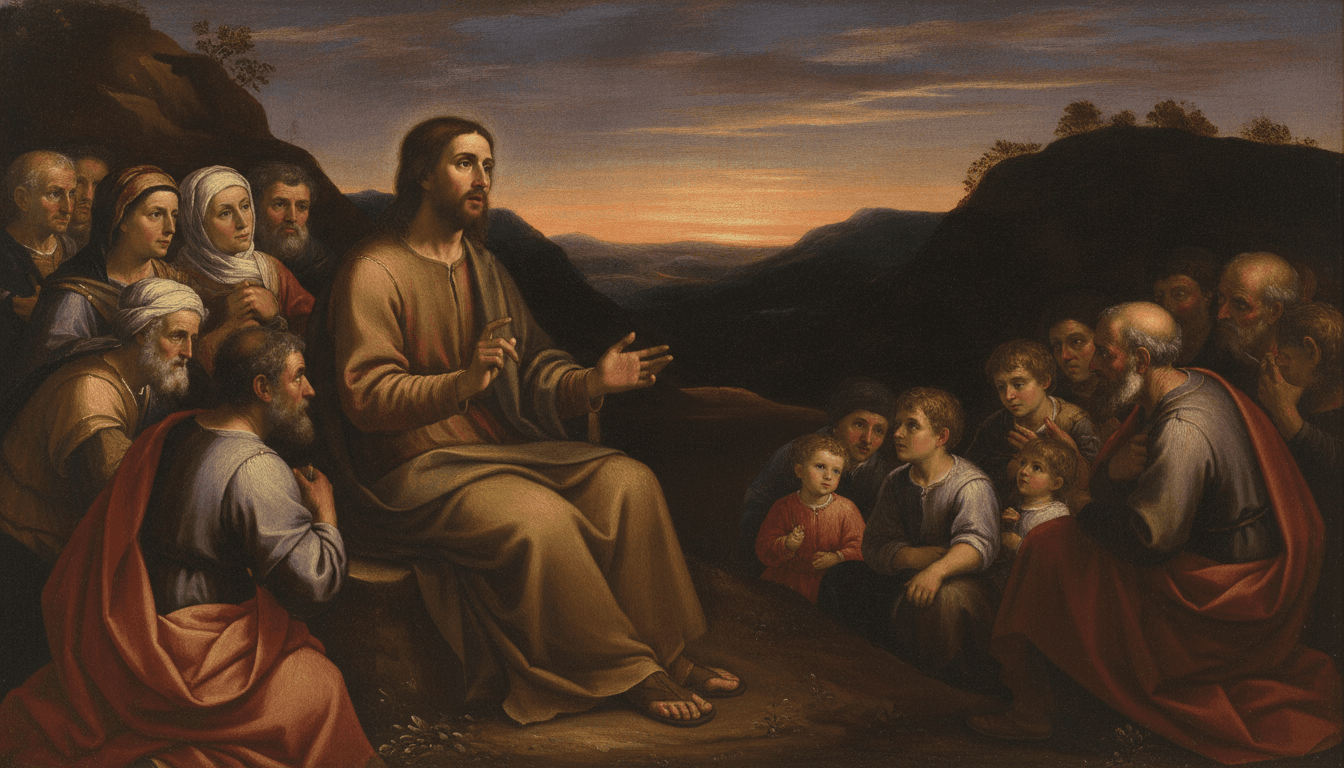
Jesus asked 307 questions in the Gospels. He answered questions directly only three times. He was not afraid of questions. He was afraid of easy answers.
March 16, 2026
Good questions are dangerous things.
They open doors that were meant to stay closed. They disturb arrangements that depend on nobody looking too carefully. They make people uncomfortable in rooms where comfort has been carefully maintained.
Jesus asked 307 questions in the Gospels. He answered 307 questions directly — only three times.
He was not afraid of questions. He was afraid of easy answers.
Here are seven questions worth sitting with.
1. Why did Jesus never write anything down?
He was literate. He read from the Isaiah scroll in the synagogue. He wrote in the dust when the crowd brought the woman to be stoned.
But he left no document. No treatise. No statement of his own doctrine.
Everything we have about Jesus was written by other people, after the fact, from memory and testimony.
Why? What does it mean that the founder of the world's largest religion deliberately left no written record of his own teaching?
Maybe because the teaching was always meant to be lived. Not read. Not debated. Not systematised.
A road does not need a map. It needs walkers.
2. Why did he choose the people he chose?
Fishermen. A tax collector. A zealot who wanted to overthrow Rome. A doubter who needed to touch the wounds to believe.
No theologians. No philosophers. No rabbinical scholars. No people the religious establishment would have chosen.
The ones the rabbis had already passed over were the ones he called.
What does that tell you about who the Kingdom is actually for?
3. Why does he seem more comfortable with outsiders than insiders?
Read the Gospels looking for who Jesus is most relaxed with.
The woman at the well. The Syrophoenician woman who argued with him. The Roman soldier whose faith surprised him. The Samaritan leper who came back. The thief on the pole next to him.
Every one of them outside the approved community. Every one of them receiving something the insiders either did not receive or did not recognise.
He said the last will be first. He meant it. And the ones who were most certain they were first were most in danger of being last.
4. What did he mean by the Kingdom of God?
He talked about it more than almost any other subject.
The Kingdom of God is at hand. The Kingdom of God is like a mustard seed. The Kingdom of God belongs to children. Seek first the Kingdom of God.
But what is it?
He never gave a systematic definition. He kept describing it from the outside — in parables, in metaphors, in pictures that approach the thing without quite landing on it.
Maybe because the Kingdom is not a doctrine to be understood. It is a reality to be entered. And the entrance is narrow — not because the theology is complex, but because self must pass through it.
5. Why does he keep saying "your faith has healed you"?
Count the healings where he says this.
The woman who touched his cloak. Blind Bartimaeus. The ten lepers. The woman with the bent back.
Not: my power has fixed you. Your faith.
What is he saying about the relationship between trust and what becomes possible?
6. Why was he executed as a political criminal?
Crucifixion was the Roman punishment for slaves, foreigners, and political criminals.
Not heretics. Rome did not crucify heretics.
The charge above his head was political: King of the Jews.
A purely spiritual teacher with no political implications would have been ignored. He was killed because he was dangerous to the order that Rome and the temple establishment had built together.
What does that tell you about the nature of the Way he was pioneering?
7. Why does he keep asking questions instead of giving answers?
In the Gospels, Jesus responds to a question with a question far more often than he gives a direct answer.
He consistently refuses to do the thinking for people. He consistently refuses to hand out answers that can be stored and retrieved without the cost of the question.
Maybe because the questions are the point. Not as an intellectual exercise. As a way of life. As the posture of someone who has not yet arrived and knows it.
Are you still asking?
Written by
Oliver T. Shepherd
Functional Faith — one question at a time.