What the Wax Holds: A Different Way of Thinking About Jesus
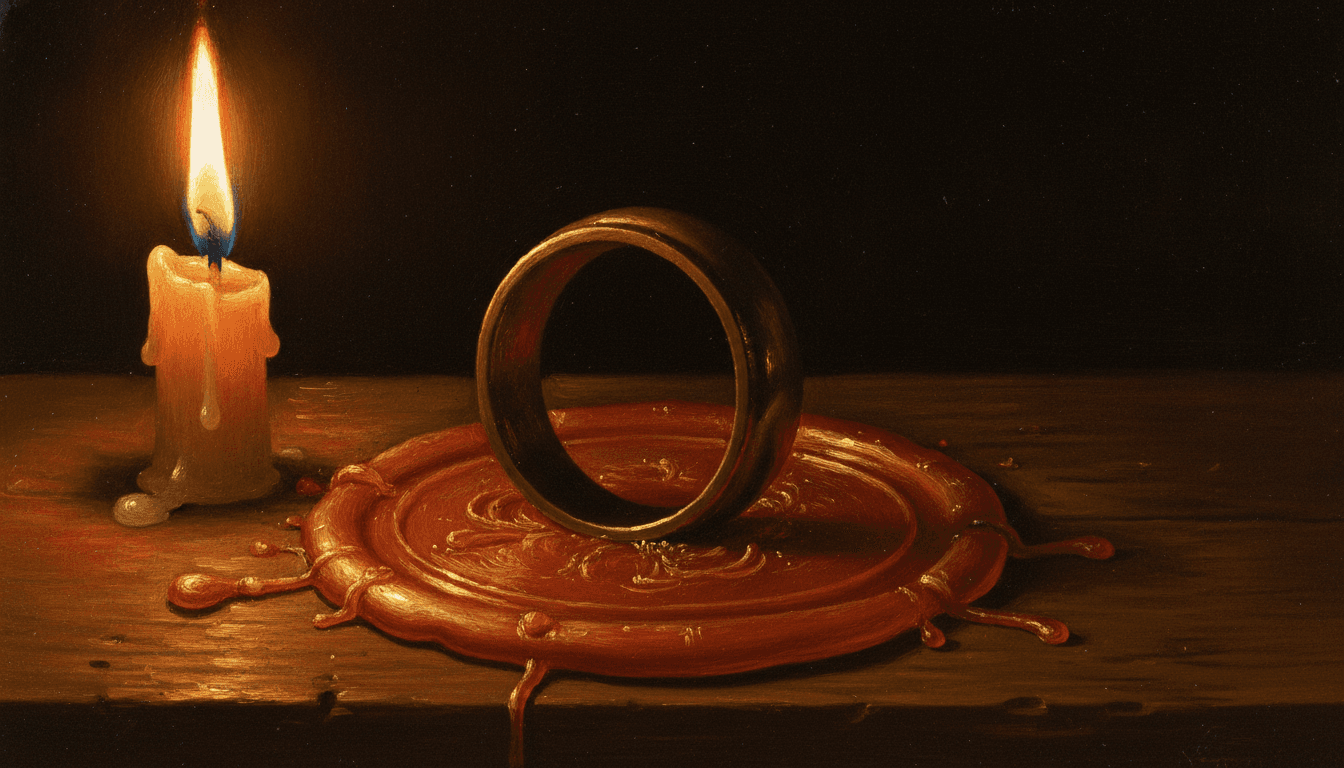
Imagine a signet ring pressed into wax. The impression is not the ring. But it is an exact representation of the ring. This is one of the oldest analogies for Jesus.
May 25, 2026
Imagine a signet ring pressed into wax.
The impression in the wax is not the ring. It is not made of the same material as the ring. It does not have the ring's weight or hardness or permanence.
But the impression is an exact representation of the ring. Every detail of the seal is present in the wax. Every mark, every line, every feature of the design. Someone looking at the impression sees, accurately, what the ring looks like.
This is one of the oldest analogies for the relationship between the Father and the Son.
The Letter to the Hebrews calls Jesus "the exact representation of his being" (Hebrews 1:3). The word in Greek is charakter — the impression made by a stamp or seal. The same root gives us the English word character.
What the analogy illuminates
The wax holds the image of the ring completely.
Not approximately. Not partially. Completely. Every feature of the design is present.
And yet the wax is not the ring. It is not made of the same substance. It did not exist before the ring was pressed into it. It is a created thing that carries the impression of something it did not create.
This is the Functional Faith reading of Jesus.
He is the complete, exact, fully accurate expression of the Father's character in human form. To see him is genuinely to see the Father — not because he is identical to the Father, but because the impression is exact.
"Whoever has seen me has seen the Father." (John 14:9)
Not: I am the Father. Whoever has seen me has seen the Father. The impression is complete enough that the distinction collapses in the experience of the one encountering it — while remaining real in principle.
Why the material matters
The wax is different from the ring.
And this difference is not a deficiency. It is what makes the impression useful.
If Jesus were simply identical to the Father — merely wearing human form as a temporary disguise — then the incarnation would be a performance rather than an event.
But if he is the impression — the creaturely expression of the divine character, genuinely creaturely, genuinely limited, genuinely under pressure — then what he demonstrates in his life is genuinely available to human beings.
He showed what the Father's character looks like in flesh. In real limitation. Under genuine pressure. At genuine cost.
That is the impression. Complete. Exact. And made of the same material as the rest of us.
What the wax holds under pressure
The most significant thing about the wax analogy is what happens when the wax is under heat.
Wax softens under pressure. It can lose the impression. The seal can be distorted.
The Pioneer held the impression under the full heat of what human existence can produce.
Hunger in the desert — forty days. He held it. Betrayal by the closest people around him. He held it. Unjust arrest, false accusation, mockery, torture. He held it. The wooden pole. The cry of desolation. He held it.
He held the shape of the Father's character under the maximum possible pressure.
This is what the wax holds. Not an easy impression in comfortable conditions. The exact character of God held in human form under every possible test.
And having held it — he commissions us to hold it too.
Written by
Oliver T. Shepherd
Functional Faith — one question at a time.